Thursday, August 16, 2012

Dialogue on n-Color Arithmetic (1)

Part 1:
2-Number Arithmetic

Si Emo came to his Grandpa Ki Algo telling him his adventure in the strange islands of Numberland. Each island is populated by finite collection of numbers. Each number in the island adds or multiplies to other number getting other number:

1-Number Arithmetic

Ki Algo: What is the strangest island that you have visited.
Si Emo: It is the smallest of the islands is populated by single number.
Ki Algo: What number is that?
Si Elmo: It is zero which is symbolized by 0.
Ki Algo: What is so strange about that?
Si Elmo: The single zero that I met in the told me that in the past there are many zeros lived in the island. But because every time they're melt to each other by  addition and multiplication, the island population is reduced. It is because 0 + 0 = 0 and 0 x 0 = 0.  So every time they meld a zero is diminished. That's why the population now is only one number: zero

2-Number Arithmetic

Ki Algo: Surely you have a boring adventure in the land of 1-number. What is your next adventure

Si Emo: I visit the land of 2-number. The population is the numbers 0 and 1.   They have a rule of melding by addition similar to the rule of melding by multiplication for 2-color numbers that Si Nessa had found out. If you add zero to any number, you get the same number. It is similar to zero in our real number arithmetic.

Ki Algo:
  Well it seems that they follow the rule of modulo 2 addition

Si Emo: What is modulo 2 ?

Ki Algo: If you have a number X, you can subtract the number by 2 repetitively until the rest is equal to a number smaller than 2.  The rest number is called X modulo 2. For example 7 modulo 2 = 1 and 4 modulo 2 is 0.
Si Emo:  I got it. So the table for the addition is

+ 0   1 
0 0 1
1 1 0

Ki Algo:
What about 2-number multiplication rules

Si Emo:
The rules can be simplified to the following table

.   0    1  
0 0  0
1 0 1

Ki Algo:
Obviously, it is the rule of multiplication of numbers modulo 2. Because now we have only 2 numbers, let us call the arithmetic of the two numbers as 2-number arithmetic.

Si Emo:
Is the 2-number arithmetic a field?

Ki Algo:
Yes, it is called finite field by mathematicians. Electric engineers now use it to code their messages across the noisy channel of communication.

Wednesday, August 15, 2012

Notes on 2-Color Numbers

Notes on 2-Color Number

Dear Blog Readers
I have to add some notes to the dialogue on 2-color numbers

1. Si Nessa discovered that there are two kinds of 2-color number. One type is 2-color numbers with Red number unit which is squared to unity and the other type is 2-color numbers with Pink number unit which is squared to minus unity. The Red 1 and the Pink 1 is respectively represent counter-imaginary unit e and imaginary unit i of the counter-complex and complex numbers system.

2. Color symbology is more economic because we do not have to use new letter symbols for new non-real units. We are just coloring the real number symbol to represent the non real number. Of course the color chosen is arbitrary. This color symbology will make the hypercomplex number system more intuitive and comprehensible for primary school students.

3. It can be proved that Black-Red numbers or countercomplex number, while does not form a field arithmetic, can be regarded as direct sum of two fields, each is isomorphic to real number field, form by by real multiples of idempotent because the the two idempotents are zero divisors.  That's why it does not have many interest from mathematician. On the other side, the black-pink numbers or complex numbers are very useful to physics and engineering.

4. But it can also be proved that complex and countercomplex number system is just two of three binary or duplex number systems in which non-real units is following quadratic equation. The other one is dual number system where its non real number unit d is squared to zero. This number system can be realized as another 2-color number, say Black-Brown  number, with multiplication checker board.

          
where the white box represents zero.

5.In the mythical Numberland, Black-Brown numbers more likely to populate the Dichromic Zero province that has not  been visited by Si Nessa. The Dichromic provinces are in the many dimensional number country: Polychromic. The polychromic country is the mythical symbol for higher dimensional number domain: the hyper-complex numbers. Discussion of hypercomplex number can be found in hypercomplex@yahoogroups.com maintained by Jens Koeplinger. Anybody who are interested to  many dimensional numbers can join the egroups to discover how binary numbers itself is just special kind polyplex numbers that was discovered by my creative friend  Marek Ètrnáct.

6.The Black-Red or Counter-complex numbers and Black-Pink or complex numbers are only parts of the more mysterious hypernumbers discovered by late logician and philosopher Charles Muses that was discussed in hypernumber at yahoogroups.com maintained by myself. I create the egroup to continue the discussion in hypernumbers@yahoogroups.com that was extinct because it was closed by the owner Kevin Carmody, an informal student of Charles Muses, has been redirect his attention from the study of hypernumbers to the study of science of consciousness in the context of Maharishi Mahesh Yogi Transcendental Meditation in scienceofconsciousness@yahoogroups.com.

Dialogue on 2-Color Number (4)

Part 4:
Arithmetic Similarity

Si Nessa had returned from Bichromic Two which is a province in Numberland. Bichromic Two is populated by 2-color numbers consisting black and pink numbers.  Bichromic One, that she had visited  before, is a province populated by 2-color numbers consisting of black and pink numbers. Si Nessa found out that both regions have similar rules of composition except for the multiplication rules for the same colored numbers. The pink number times a pink number is a negative black number, while she know before that the red number times a red number is simply black number. That's why she called the Black-Pink number is a twisted 2-color number. She told her grandma Ni Suiti about her findings in the company of her brother Si Emo and her Grandpa Ki Algo:..
Ni Suiti: Nessa, your discovery interesting, but I'll let you know that your grandpa Ki Algo reformulate my verbal rules for 2-color number multiplication with the following table.
X d 
a ac   (ad) 
b cb     (bd)    
Si Nessa: Wow, it is difficult for me to memorize.

Ni Suiti:  For you,  if you remember distribution axiom, I will simplify your grandpa's table by changing all letters with number 1, then the multiplication table can be simplified into
X 1 
1 1
1 1
in more simplified form
 1   1
1  1   
Si Nessa: Yes. That is a simpler table.

Ni Suiti: We can simplify the table more, by drawing just a 2 x 2 checker board with just two colors.
For black-red number, the table will be represented by
            

Si Nessa: That's beautiful and very easy to memorize. Now what about the Black-Pink numbers that I found in Bichromic Two.
Ni Suiti: The multiplication checker board for Black-PinkNumbers is
o       
o
where the white ring is representing the minus sign.
Si Nessa: How can I use the wonderful table

Ni Suiti: We can replace the formula (a + b)(c + d) = (ac+bd)+(ad+bd)
in this simple steps
  • Make a multiplication checkerboard
  • Put column (a,b) on the left of the table
  • Put row (c,d) on the top of the table
  • Multiply the elements of row and the column and
    multiply them with the sign in the suitable board little boxes
  • Add up all the elements of the table using the rule of addition.
Ni Suiti: I think this algorithm is easier for people's mind
who is stronger in intuition, like me, rather in logic, like Ki Algo.
Your Grandpa's algebraic formula is suitable for left-brainer
my diagramatic algorithm is suitable for right-brainer.
Si Emo: OK my brain is like grandpa's. For me the algorithm is too complicated. How is about that Grandpa?

Ki Algo:  Good. Your grandmother Ni Suiti has make the 2-color number multiplication more visual. I will reformulate your grandmother's checkerboard with numeral and letters. Let us symbolized black box with 1,  the red box with the symbol e and  pink box with the simbol i
Si Emo: Grandma's multiplication black-red checker board will be symbolized by the following table
 1   e 
e 1
and Grandma's multiplication black-pink checker board will be symbolized with the following table
 1     i   
i -1
Si Nessa:  Oh! So simple table. That's really a very simple table.
Ki Algo: Formulated as such symbolic table, mathematicians will directly know that Black-Red numbers is nothing but another form of hyper-complex numbers and Black-Pink numbers is nothing but another form of complex numbers.
Ni Suiti:  In my words. Hyper-complex numbers is nothing but another form of Black-Red numbers and complex numbers is nothing but another form of Black-Pink numbers.
Ki Algo: In other words the arithmetic system of black-red numbers is similar to the arithmetic of hyper-complex number ring and the arithmetic system of black-pink numbers is similar to the arithmetic of complex number field. Mathematicians found out that all the field axioms for the real number arithmetic are also followed by complex numbers arithmetic.
Ni Suiti:  Why is that black pink numbers form a field arithmetics?
Ki Algo: No zero divisors exist in its arithmetic due to the presence of minus sign in its unit multiplication table.
Ni Suiti: OK. Now, by using my two color checkerboard we can teach the complex and hyper-complex arithmetic to primary school kids as 2-color number arithmetic.
Ki Algo: That's a great idea. Hopefully  teachers will take your advice.

Dialogue on 2-Color Numbers (3)

Part 3 :
Strange Numbers

Ni Suiti was so bewildered by Ki Algo exposition of Ring as the arithmetic structure of 2-color numbers. She thought there is nothing strange with that at all. All the Ring axioms are also followed by real numbers. So real numbers arithmetic is also a Ring.
Ni Suiti:  I suspects that the 2-colored numbers has similar arithmetic as the real numbers. 
Ki Algo:  Oh, no. There are duet numbers which is squared to themselves.  z2 = z
Ni Suiti:  I think that is not so. Real number arithmetic has those too. Zero and Unity is such a number
Ki Algo:  Well the 2-color numbers have other numbers squared to themselves beside them.
Ni Suiti:  What numbers?
Ki Algo: They are z1= 1/2 + 1/2 and
z2= 1/2 - 1/2

Ni Suiti:  My goodness. There are two of them.

Ki Algo:  Mathematicians called the number as Idempotent number. Idem means equal, potent means power. Because if you power them with any number then the results will be equal to themselves. zn = z with n any integer.

Ki Algo: OK you know now that there are two really duet numbers that square themselves to themselves. Now try to multiply them to each other.

Ni Suiti: 
z1.z2= (1/2 + 1/2)(1/2 - 1/2)=Zero
Oh! It is very strange. In 2-color arithmetic, zero is equal to multiplication of two non zero 2-colored numbers. No nonzero real numbers will multiply themselves to zero.

Ki Algo:
They called by mathematician as Zero Divisors. In fact there are infinity of zero divisors. All multiple of z1 and z2 are zero divisors.  (3 + 3)(5 - 5)=Zero for example. The existence of  strange numbers, Idempotents and Zero Divisors, shows us that 2-color arithmetic is not similar in structure to real number arithmetic.

Ni Suiti:  OK, I am wrong. The arithmetic of 2-Color Numbers is not similar to the arithmetic of the real numbers. They have more idempotents and infinity of zero divisors.

Ki Algo: Actually, mathematicians called the arithmetic of real number as Field and the arithmetic of 2-color number as commutative Ring with unity (which is Black 1 as  unity).  A Field is a commutative Ring with unity containing no Zero Divisor.

Ni Suiti:  So, the 2-ColorNumber algebra is unique because it has unique structure as the ring with infinite zero divisor and a pair of idempotent.

Ki Algo: No, it's not unique. The Ring of 2-Color Numbers has similar arithmetic structure to counter-complex numbers with two units 1 and e where both units are squared to one. Each of them equivalent to 1 and 1 . Other arithmetic similar in structure to the 2-Color arithmetic is the Group Algebra based on the 2-element reflection group.

Ni Suiti:  Anyway, I think all  2-color Numbers has common arithmetic property.
Ki Algo: I do not think so. Please wait for Si Nessa after her travel to Bichromic Two and beyond. See what she found there.
Ni Suiti: Ok. We will see who is right. You or me?

Dialogue on 2-Color Numbers (2)

Part 2:
2-Color Arithmetic

Ni Suiti was in in the company of his husband, Ki Algo, the grandfather of Si Nessa. She told him about the discoveries of their granddaughter in the Bichromic One. She like to know his opinion to his granddaughter's discoveries. Then Ni Suiti told Ki Algo about the rules of color transformation due to the arithmetic operations as it was told by Si Nessa

Ki Algo: I am surprised, but I think the table for addition is the following
+ d  
a a + c  a + d
b c + b (b + d)  
Ni Suiti:  That's cool.
Ki Algo: From the table it can be shown that the multiplication has the following property:
If a, b and c are colored number then
(1) a + b = b + a
(2) a + (b + c) = (a + b) + c

Ni Suiti:  So the ordering of the addition does not matter.
Ki Algo: The multiplication for colored number singlets is summarized in the following table
X d  
a ac  (ad)
b cb (bd)  
Ni Suiti:  That's also cool.

Ki Algo: From the table it can be shown that the multiplication has the following property:
If a, b and c are colored number then
(1) ab = ba
(2) a(bc) = (ab)c
(3a) a(b+c) = ab + ac
(3b) (a+b)c = ac + bc


Ni Suiti:  So the muliplication is indifferent of ordering of terms and it is both left and right distributive to addition.

Ki Algo: It can easily proven that the 2-color number system has a multiplicative unit: Black 1 or 1
1 (x + y) = (x + y) 1 for any duet x + y

Ni Suiti:  So is both left and right unit.

Ki Algo: I can also prove that there also have an additive unit: Zero.
Zero = x - x which has the following property
Zero + a = a + Zero = a

Ni Suiti: I think zero is colorless

Ki Algo: From the table I can derive the formula for multiplying two colored number duets

(Black a + Red b)(Black c + Red d) = Black (ac+bd) + Red (ad+bc)

If the duet x + y is abbreviated as (x, y) ,then the rule of multiplication is

(a,b)(c,d) = (ac+bd, ad+bc)

Ni Suiti:  Simple  formula to represent the long table. But the wonderful colors is lost. What a pity.

Ki Algo: Conclusively, the 2-color numbers form  what the mathematician called Ring. Of course The mathematician Ring is not some thing you can wear in your finger, it is a collection of numbers with two compositions (+ and .) which follow certain axioms.
Dichromic numbers form a Ring because for all 2-color numbers a, b and c  follow the following eight Axioms
Four Axioms of Addition
(R1)   (a + b) + c = a + (b + c) ( the addition + is associative)
(R2)    Zero + a = a (existence of identity element for addition)
(R3)    a + b = b + a (+ is commutative)
(R4) for each 2-color number a  there is a 2-color number −a  such that a + (−a) = (−a) + a = Zero
 (−a is the additive inverse element of a)
Two Axioms of Multiplication
(R5) (a . b) . c = a . (b . c) (the multiplication . is associative)
(R6)  1 . a = a . 1 = a         (existence of identity element for multiplication)
Two Axioms of Distribution
(R7) a . (b + c) = (a . b) + (a . c) (left distributivity of multiplication)
(R8) (a + b) . c = (a . c) + (b . c)  (right distributivity of multiplication)
Ni Suiti:  Wow. That's right but I lost the visual beauty of the colored. numbers.
Ki Algo: Yes, but now you gain the beauty of logical consistency.

Dialogue on 2-Color Numbers (1)

Part 1:
2-Color Numbers

Ni Suiti was in the veranda when her granddaughter Si Nessa come to tell her experiences when she went  to Numberland brought by her aunt Mak Retitia. She told Ni Suiti that the Numberland is a wonderful land. In one region of the island he found out that in there there are colorful numbers.

Si Nessa: Grandma, I have never known that numbers in the amazing Numberland where numbers have colors.

Ni Suiti:   Do you mean that we can find numbers with the same value but  has different colors?

Si Nessa: Yes, but more interesting is their properties. When two numbers meld into another number then they become another colored number.

Ni Suiti:  What is the color of the new number?

Si Nessa: They get a new color or stay in their original color according to the way they meld: addition or multiplication.

Ni Suiti:  What is the rules for color change for the addition?

Si Nessa:  If the colors are similar, the result is similar color

Ni Suiti:  So, red one plus red three is red five.

2 + 3 = 5
Black two plus Black one is Black three.
2 + 1 = 3
But what if we add two numbers of
different colors?

Si Nessa: It yields a duet which is a pair of numbers of different colors

Ni Suiti:  How many kinds of colored number are there in Numberland?

Si Nessa: I was in two colored number region of the land. They call it Bichromic province which is populated by two kind of number: Black and Red. But there are many other regions which is occupied by numbers with more than two colors. I have never been there.

Ni Suiti:  Now what is the multiplication rules of of two colored numbers?

Si Nessa: That's really simple. Black number does not change the color of the number it multiply. Red number change it.

This rule can be simplified to:
Similar colors are multiplied to Black
Different colors are multiplied to Red.

Ni Suiti:  That means
Black 2 times Red 3 is equal to Red 6
2 X 3 = 6
and Red 2 times Black 3 is equal to Red 6
2 X 3 = 6
and Red 2 times Red 3 is equal to Black 6
2 X 3 = 6

Si Nessa:  That's correct. But Dichromatic province is more populated by pairs of numbers of different colors called duets.

Ni Suiti:  I wonder what are the rules of duet melding

Si Nessa:  If it is addition, then any colored number of the first duet will add to the member of the other duet of the same color. In short: Equal colored number add up the same color

Ni Suiti: 
You mean
2 + 3 +
1 + 2 =
3 + 5


Si Nessa:  You are right grandma.

Ni Suiti:  Now how can we multiply two duets?

Si Nessa: We multiply every colored number of the first duet to every colored number of the second duet and add all the results up. In short: Add up all possible multiplications

Ni Suiti: 
(1 + 2) X (3 + 2) =
=1 X 3 + 1 X 2 + 2 X 3 + 2 X 2 =
=      3 +       2 +        6 +       4 =
= 7 + 8


Si Nessa: Right again Grandma

Ni Suiti:  What about negative numbers

Si Nessa: They're all has the same rules.

Ni Suiti:  So we can have Red minus 2 = minus Red 2 = - 2

Si Nessa: Good Grandma!

Ni Suiti: So we will make a colored number dissapear if we add it to its negative.
Red 3 + Red minus 3 =
Si Nessa: Yes. That's the magic of colored numbers
.
Ni Suiti: In summary,
For single color number addition of similar color singlet yields similar colored singlet.
Different color numbers add to a duet.
Adding colorful number duets is adding their members colorwise.
Multiplying by black singlet does not change color.
Multiplying by red singlet changes the color.
Mutiplying duets is adding all the multiplication of of their colored members.
Si Nessa:  Good Grandma. But, sorry I have to go home now. Because I have to prepare my self for tomorrow Journey to the another province of the Numberland: the Bichromic Two. Bye, now.

Tuesday, March 03, 2009

Dreams


Welcome All.

Welcome to the Alti Math FB group. I have created the group to discuss alternative maths. Alternative maths are the new mathematics created to complement the current mainstream modern math which is based on the set theory. The current math is in turn succeed the classical math based on the concept of one dimensional number and flat 3-dimensional Euclidean space. The classical physics is based on the classical math. The modern relativistic and quantum physics is based on curved 4-dimensional Riemannian space and the linear algebra of operators on the infinite dimensional complex Hilbert space.
Realizing Einstein's Dream

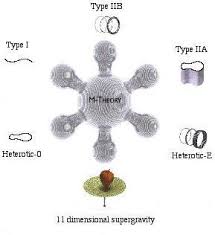
Now, we are in the post-modern era where there are 5 equally true theories of fundamental superstrings vibrating in the compactification of the flat 10-dimensional Minskowskian space.

Well, that situation is in harmony to the spirit of postmodern view of plurality of relative truths. However, the the Einstein's modern dream is to find the one and only one fundamental true theory is still lingering in the minds of 21-st century particle physicists. For example Edward Witten , in the spirit of Dirac who unified the 2 equally true quantum mechanics (the Heisenberg matrix mechanics and the Schrodinger wave mechanics) in the first quarter of the 20-th century, tried to unify the 5 superstring theories with one supergravity theory into one 11-dimensional supermembrane theory which he called the M-theory . The M-theory unify the four fundamental forces of nature at a deeper level: at the distance smaller than Planck length and at the high energy beyond the Planck energy.
In fact, the M-theory is greater than the dream of Einstein which is only trying to unify gravitation and electromagetism. Last century,. physics has finally unify the electromagnetic force with the weak and strong nuclear field in a theory of elementary particles called the standard model. M theory is trying to unify the theory of gravitation with the theory of electro-magneto-nuclear forces. The trouble is M-theory as the generalization of superstring theory predict many unknown super-partner particles of the currently known particles. So probably there is a new mathematics for the M-theory to eliminate the unobserved particles. This new math will save M-theory from becoming a kind para-physics rather than physics.

Sometimes, the M-theory is called matrix theory. This reminds us the Heisenberg matrix formulation of quantum mechanics theory which is complemented by the Schrodinger wave function formulation of the same theory. Currently, the matrix theory of Witten is complemented by the loop theory of Ashtekar . Lee Smolin is trying to unify both theories in a theory of spin network using the Jordan algebra. Meanwhile, John Baez is expecting the unification of M-theory and loop quantum theory with the new general high dimensional algebra called n-category theory. But Baez has a grander vision where he sees that physics and topology is like logic and computation. He hopes that category theory is the deeper unification between those four different disciplines.

Dreaming Bigger Dreams

Now, for a long time, in the the internet I watch those different attempts to unify sciences. If the unification is realized, I think there will be a new scientific revolution, but the revolution has many different directions. In fact there are many alternatives development of the new physics based on different new extended mathematics. For example Rugerro Maria Santilli has discovered the current mathematics is only a part of a greater mathematics. The new mathematics is structured hierarchically into four systemic levels: the current mathematics, the iso-mathematics, the geno-mathematics, the hyper-mathematics each with its own isodual. The four levels is differentiated through the different lifting of the ordinary multiplication of two numbers and matrices. Santilli hopes that the new greater mathematics will unify physics, chemistry and biology. In fact Santilli started the science revolution by reforming the quantum mechanics by turning it to what he called hadronic mechanics and that distressed mainstream physicists.

That is the story of future revolutions of science. The Santillian and Baezian dreams are not contradicting each other. They are complementing each other. Consequently, I think the category theory has to be generalized so it can adapted to the expansion of mathematics as seen by Santilli. So, the Santillian dream will be a deeper foundation of unification of different sciences. Ultimately, we will have a much greater dream than Einstein's dream who wished to unify different fundamental forces in physics. Far from just unifying physics, the new dream will unify different sciences with the new generalized mathematics.

A logician who tried to generalized mathematics is Charles Muses who develop the concept of complex number as two dimensional number into a ten dimensional numbers which is called the hypernumbers.. He hoped that the hypernumber theory will unify physics with psychology. Another mathematician who is interested in unifying physics and psychology, Ben Goertzel , is using an 8 dimensional extension of complex number, used by quantum physics, octonion as mathematics of psychology. Octonion is one first two levels of musean hypernumber. Octonion algebra is also just a member of series of hypercomplex number which is known in the mainstream math as Cayley-Dickson algebras.
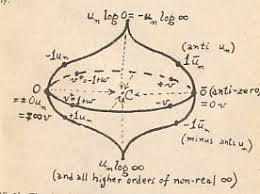

In the Cayley-Dickson sequence of the of ever doubling dimension of numbers, quaternion the 4-dimensional number, is between the 2-dimensional complex number and the 8-dimensional octonions. Above the octonions there is a system of sedenions, the 16-dimensional numbers. Above them there are 32, 64 and generally 2^n dimensional numbers which like the sedenions behave very strange where different non zero numbers can multiply themselves into zero. The algebraic Cayley-Dickson has a curious property. Every doubling of the numeric space dimension weakens the compositional properties of the number system. Complex number system is not well ordered. Quaternions system is loosing the associativity of multiplication. Octonions are non-commutative like quaternions but they loose the associativity of the quaternion. Sedenions are non-commutative and non-associative like octonions but they are loosing the property of unique multiplication because they have zero divisors.

Ultimate Dream

Well there is a philosopher sociologist, Kent Palmer, who identified the sedenions and higher dimensional CD system as the mathematics that can be used to the science of the enviromental meta-systems surrounding the reflexive social systems which in turn can be formulated with octonions and the less complex autopoietic living system with quaternions and dissipative chemical system with complex numbers. So the whole Cayley-Dickson numbers describes the multi-level complexity of the holistic nature not just the physical one. The interesting part is that Kent Palmer see system and metasystem is a pair of eight levels of schemas from the facet to the pluriverse which described the whole reality, so set-based mathematical n-category theory must be complemented by the mass-based mathematical n-blob theory. Both n-dimensional theories can be synthesized into n-aggregate theory which he hope can be used to describe the whole reality.

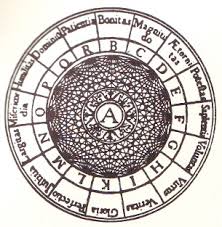
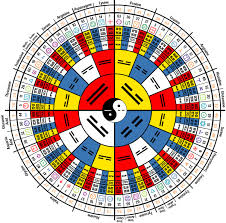
Ben Goertzel and Kent Palmer are the friends of Tony Smith. Tony Smith is a lawyer who is doing physics in his spare times. He has an alternative unified particle physics theory complementing the M theory and loop quantum gravity. He called his theory as VoDou physics. The D4-D5-E6-E7-E8 Voudou physics is a physics model of particles in 8 dimensional octonionic space-time rather than physics of super-membranes in 11 dimensional space of M-theory. He discovered the parallelism between his unified physics theory and the Vodou religion in the Africa. And he believes that many different system in different part of the world is the degeneration of the scheme of Ifa religious oracle. That's why he was not so surprised when he discovered many aspects of his theory is numerically parallel to the commandments of Jewish prophet Moses , the philosophy of unity of Muslim mystic Ibnu Arabi , the 16 schemes of Christian Ramon Llull , the Taoist I Ching oracle of the Chinese, the Hindu Vedic math of the Indians. The source of similarities is the Clifford algebras at the foundation of his unified theory. So he believes of the ultimate unification of the reformed postmodern science and the ancient religious wisdoms.
My Dream

Well, the infinite hierarchy of n-categories and their generalization, Palmerian n-blobs and n-aggregates, the finite hierarchies of Santillian 8 new maths, Charles Muses 10 meta-dimensional hypernumbers, the infinite hierarchies of dimensional doubling of Cayley-Dickson algebras and Clifford algebras are the examples of alternative mathematics. Many of them are outside of the mainstream mathematics. All of them is potentially able to bring revolutions within of the mainstream science. They will revolutionize science by bringing the so-called paranormal phenomena into the plethora of normal natural phenomena of the conventional science. They will make science becoming more comprehensive. Hopefully some of them will become the mainstream mathematics. That is my high hope after reading them in the great cyber-book Internet which is comprehensively indexed by google search engine. That's why I create the Facebook group alti math. Join me celebrating the metamorphosis of the restricted conventional modern science into the more comprehensive future post-modern science which is now called pseudoscience. Be creative to find new alternative maths. Report your discoveries here: the FB group Alti Math.

Thank you.
best regards
Arma.

Friday, January 26, 2007

Hypernumber Square

Hypernumber units can be put curiously enough in a Magic Square as it can be seen in House of Horus' Hypernumber Magic Square

Tuesday, August 22, 2006

Musean Hypernumbers


Musean Hypernumbers are numbers with associated dimensionalities, discovered by Dr. Charles A. Musès (1919–2000). Musean Hypernumbers are believed as forming a complete, integrated, connected, and natural system.

There are ten levels of Musean hypernumbers, each with its own arithmetic and geometry. These ten levels was briefly described in Kevin Carmody's hypernumbers section of his website. Unfortunately he deleted all his contributions to the study fearing that it will be abused.

To know what a Musean hypernumber is you can visit Jens Koeplinger contribution in Wikipaedia.


To understand hypernumbers better, join
Hypernumbers online discussion group as a continuation of the now extinct hypernumbers@yahoogroup.com moderated by Kevin Carmody. In the new egroup file section you can get the archieve of the postings in Kevin's egroup.